Why Numbers and Letters Are Everyone’s Superpower
Introduction
It’s a truth universally acknowledged, that a single student in possession of a good education, must be in want of both maths and English. From the moment we learn to count our toes and recite our ABCs, these two subjects are woven into the fabric of our daily lives—together, they form the backbone of lifelong learning. Whether you’re six or sixty, a maths maverick or a Shakespearean scholar, the journey through numbers and words is packed with surprises, challenges, and the occasional existential crisis in front of a quadratic equation.
Why Maths and English Matter (To Everyone, Everywhere)
If you’ve ever wondered when you’ll use algebra in real life, the answer is: probably when you least expect it (and usually at the supermarket, staring at a 3-for-2 deal). Similarly, if you’ve found yourself in desperate need of a pithy comeback, or trying to decode the mysterious email from your boss, you’ll appreciate the subtle power of a well-chosen word.
But beyond adulthood’s small victories, the real reason these subjects endure is simple: maths and English are the ultimate keys to unlocking the world. They encourage logical thinking, creativity, resilience, and communication. Whether you’re calculating your change or penning a heartfelt apology, you’re wielding skills that transcend textbooks and exams.
Maths and English in the Early Years: Counting Sheep and Storytime Shenanigans
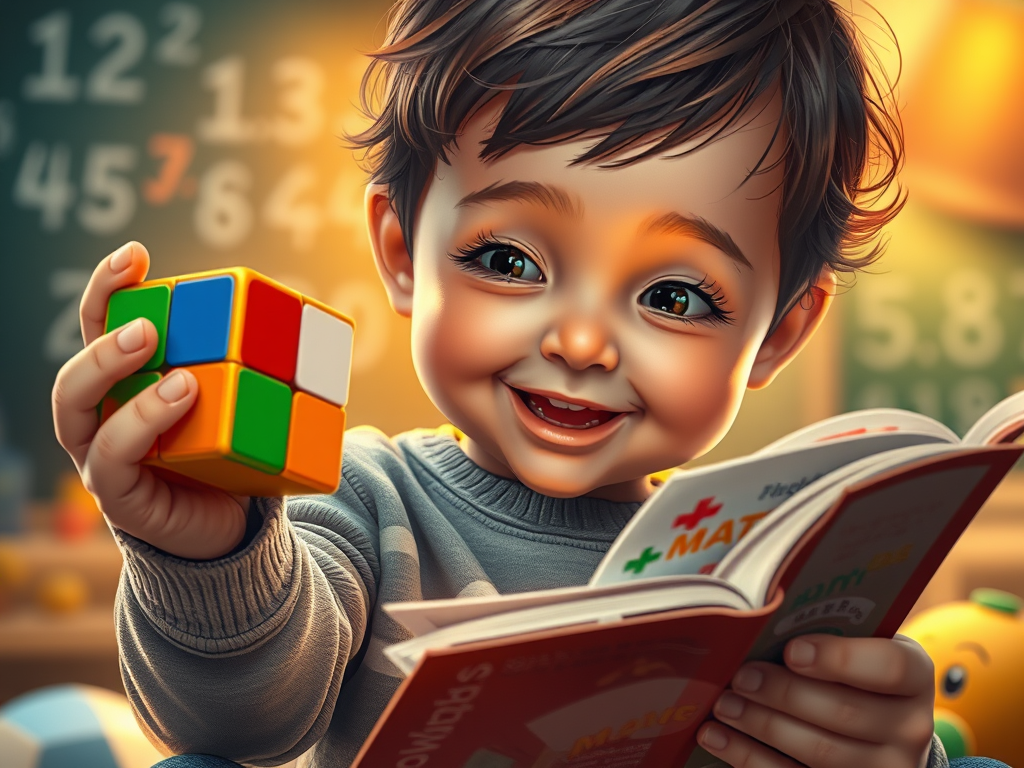
Picture the scene: a child, wide-eyed, clutching a picture book in one hand and a colourful abacus in the other. The earliest lessons in maths and English are a riot of rhymes and number games. “One fish, two fish, red fish, blue fish”—Dr. Seuss was onto something. Counting, sorting, singing, and storytelling are building blocks for later learning.
Children’s natural curiosity means they want to know why the sky is blue, how tall the tallest dinosaur was, and whether cats can do maths. If you’ve ever seen a toddler negotiate for an extra biscuit, you’ll realise they’re already mastering the basics of mental arithmetic and persuasive language.
The Primary Years: Times Tables and Tall Tales
As children grow, so do the expectations. The times tables become a rite of passage (often accompanied by groans and ingenious mnemonic devices). Fractions, decimals, and the enigmatic concept of “carrying the one” start to make appearances, sometimes as villains, sometimes as unsung heroes.
Meanwhile, English lessons evolve from phonics to comprehension, from spelling tests to creative writing. Children discover that words can paint pictures and that metaphors are not just something adults use to sound clever. The triumph of telling a joke that actually lands, or writing a poem that makes someone smile, is as real as any gold star.
Secondary School: The Drama Intensifies
Now the plot thickens. Suddenly, maths asks you to solve for x, while English invites you to unpick Hamlet’s motives. There are equations with more letters than numbers and novels with more subplots than a soap opera. It’s a time of great reckoning—and sometimes, great rebellion.
Teenagers often ask, “Why do I need to know this?” The answer, of course, is that you’re equipping yourself not just to pass exams, but to navigate life’s labyrinths. Pythagoras’ theorem does not help you pick a university, but the perseverance it teaches certainly will. Analysing Shakespeare won’t help you order a pizza, but it can make you a champion debater at the dinner table.
For Adults: The Saga Continues
The myth that maths and English are only for school is exactly that: a myth. In adulthood, these skills are hidden in plain sight. Whether you’re calculating your mortgage repayments, deciphering the latest government guidelines, or penning the perfect CV, you’re drawing on lessons learnt long ago.
Many adults return to study later in life, whether to brush up on rusty maths skills, enjoy the thrill of a book club, or tackle the crossword with renewed vigour. The beauty of lifelong learning is that it’s never too late to become fluent in the language of numbers and words.
Supporting Learners Across All Abilities
The magic of maths and English is their adaptability. Teachers, tutors, and parents become educational alchemists, conjuring lessons that suit every learner. For some, numbers dance off the page; for others, they march in strict formation. Some students write stories with the flair of Dickens; others prefer bullet points and brevity.
Support comes in many forms: tactile aids, audio books, visual diagrams, extra time, patient encouragement, and a good old-fashioned sense of humour. The best educators know that progress is rarely linear, and that a breakthrough often arrives when least expected—sometimes disguised as a joke, sometimes as a “Eureka!” moment in the shower.
Wit Meets Wisdom: Creative Approaches for All
Let’s face it: a worksheet can only do so much. The best lessons blur the boundaries between maths and English. Write a short story about a mathematically gifted detective or craft a limerick about parallel lines. Use maths to decode secret messages or English to narrate the adventures of a mischievous minus sign.
Games, puzzles, debates, and scavenger hunts all have their place. The real secret is to make learning a joy, not a chore. If we can laugh about the absurdity of irregular verbs or the mystery of prime numbers, then we’re halfway to mastery.
Celebrating Mistakes (and the Occasional Victory Dance)
No witty blog about maths and English would be finished without a nod to the noble art of getting things wrong. Mistakes are evidence of effort, not failure. They are the stepping stones to insight, resilience, and, occasionally, a good anecdote to share at parties.
Remember the time you confidently declared that 7 x 8 was 54, or wrote “defiantly” instead of “definitely”? You’re in good company. Some of the world’s greatest mathematicians and writers were infamous for their blunders—and their bounce backs.
Conclusion: The Never-Ending Adventure
Maths and English are for everyone. They are the tools we use to make sense of the world, communicate our dreams, and solve the puzzles that pop up in daily life. They are the secret sauce behind every negotiation, adventure, and existential pondering.
So, whether you’re a child marvelling at the magic of numbers, a teenager wrestling with poetry and polygons, or an adult rediscovering the joys of wordplay and algebra, remember: you’re part of a grand tradition. Embrace the challenge, celebrate the quirks, and never underestimate the power of a well-placed pun—or a perfectly solved equation.
Here’s to the dynamic duo—your sentences be sharp, your sums be swift, and your learning journey full of both wit and wisdom.
